
Salt Lake County Marriage License Records
Salt Lake County marriage license records begin with the county clerk, the office that issues new licenses, performs ceremonies, and keeps the marriage files after the ceremony is complete. Salt Lake County is Utah's most populous county, and it contains both the state capital and the largest city in Utah. If you need to apply for a new license, confirm where a marriage was recorded, or track down an older certificate, the county clerk is the main place to start. The pages below point you to the office, the records trail, and the historical sources that can help when the county file is not enough on its own.
Salt Lake County Quick Facts
Salt Lake County Marriage License Office
Salt Lake County Clerk Lannie K. Chapman oversees the Marriage Division at the county government center in Salt Lake City. The division issues marriage licenses, conducts marriage ceremonies, and keeps county marriage records. For people who live in Salt Lake City or elsewhere in the county, this is the office that handles the paper trail from the first application to the final recorded license. The current public marriage page lists the marriage division at 2001 South State Street, Suite S2-200, with weekday hours from 8:00 AM to 5:00 PM.
The marriage desk sits inside the clerk's broader office, which matters because the same staff group handles both a new license and follow-up record questions. If you already know the approximate wedding date, the county clerk is still the best starting point for a certified copy or a search by name. If you do not know the exact date, the office can still help narrow the record by using the county's own filing trail.
| Office | Salt Lake County Clerk, Marriage Division |
|---|---|
| Address | 2001 South State Street, Ste S2-200 Salt Lake City, UT 84114 |
| Phone | (385) 468-7300 |
| Hours | Monday through Friday, 8:00 AM to 5:00 PM |
| Website | saltlakecounty.gov/clerk/marriage |
The Salt Lake County Clerk Marriage Division page confirms that the office issues licenses, conducts ceremonies, and keeps marriage records. That combination makes the division the first place to check when you need the license desk, the marriage file, or a certified copy.
The county marriage division page is also where you can confirm the current location and service details before you go downtown. The Salt Lake County Clerk Marriage Division page is the most direct source for the current marriage-license desk information.
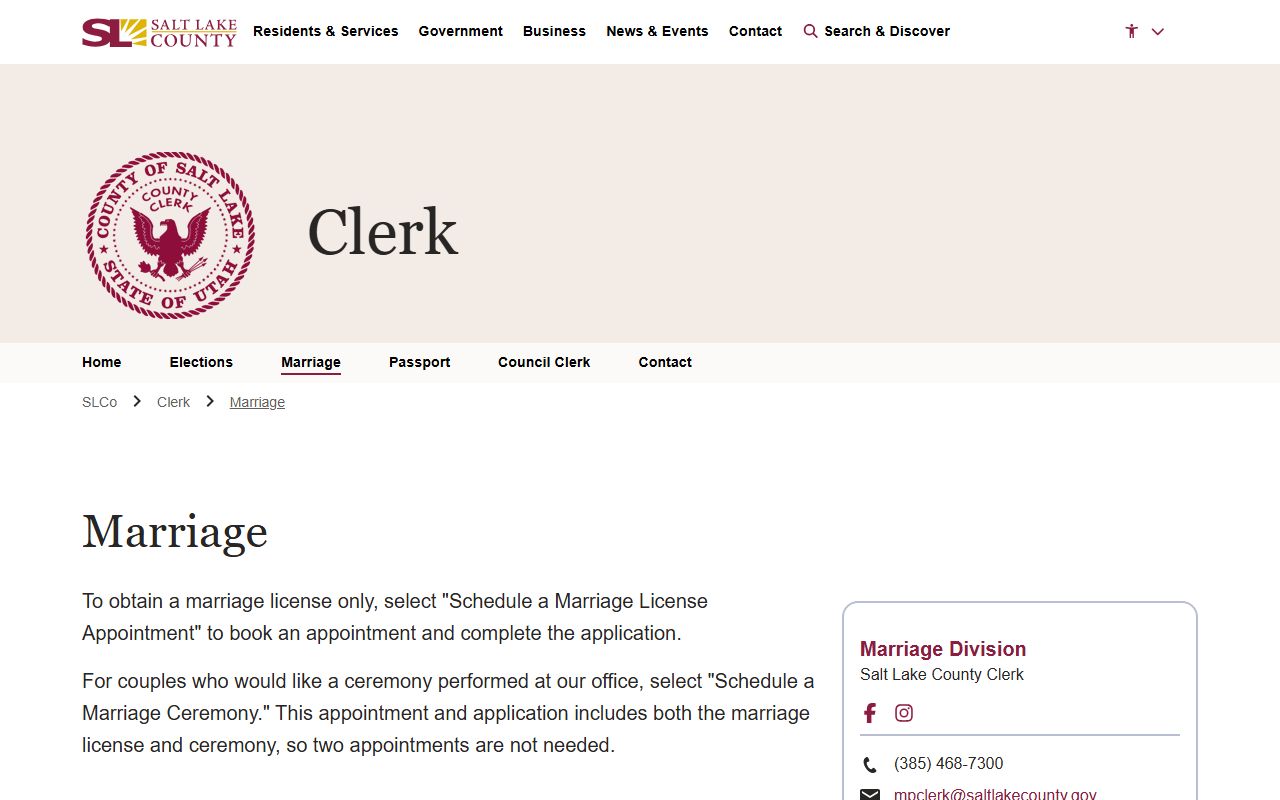
That marriage division page is the most direct way to confirm the current service window before you visit.
Search Salt Lake County Marriage License
If you already know a marriage took place in Salt Lake County, the clerk's office is the place to search first. The marriage division keeps the county's marriage files, so a search there can point you to a certified copy, a recorded license, or the right file number for a historical entry. That is true whether the marriage happened last week or many decades ago.
Salt Lake County's marriage page also helps you narrow the record trail before you call. A current request is usually easier to process when you know the couple's names, the approximate year, and the city or venue where the ceremony happened. If you have the officiant name or the license number, that makes the search even faster.
To make a Salt Lake County marriage license search easier, have these details ready:
- Full name of one or both spouses
- Approximate marriage date or year
- City, venue, or ceremony location
- Officiant name if you know it
- License number or copy reference, if available
For copies or record confirmation, the clerk can usually search by name and narrow the result from there. That is especially helpful if you are working from a family story, an old certificate stub, or a scanned image with only part of the filing information visible. The office keeps the marriage records alongside the licensing function, so the same division can answer questions about both parts of the file.
The Salt Lake County Clerk overview explains that the office issues marriage licenses, conducts ceremonies, and keeps marriage records. That makes the clerk the most practical starting point for a county-level search when you do not need the full state vital-records process.
When you are not sure whether the record is recent enough to still be in the office file, ask the clerk whether the marriage was entered in the county record book or whether you should also check the historical index. Salt Lake County keeps both current and older marriage references, so you may need only one office visit to get the answer.
The Salt Lake County Clerk overview is the broader office home for that record search, and it shows how the marriage division fits into the larger clerk office. That is useful when you need the office structure before you ask for a record copy.
That county clerk overview page is the right follow-up when you need the division's broader contact details or a record request path.
Salt Lake County Marriage License Process
Utah law says a marriage license comes from the county clerk. In Salt Lake County, that means the clerk's office is the place where the application is filed and the record begins. Under Utah Code section 30-1-4 and Utah Code section 30-1-8, the county clerk issues the license after the application is filed and the office collects the identifying details that go into the record.
The Salt Lake County marriage page is the right place to confirm the current application steps, office access rules, and any county instructions that apply before the license is issued. That matters because process details can change, while the county clerk remains the official office that issues the license and keeps the resulting record.
The county also performs marriage ceremonies by appointment. That means the same office can connect the application, the ceremony, and the recorded license without sending you to another department. For many couples, that is the simplest way to make sure the marriage file stays complete from start to finish.
The county's marriage application page makes the in-person step very clear: both parties have to appear, and the office uses the identification check to complete the file. If you are comparing a wedding date to a recorded license later, that office step is part of the same paper trail.
The county's online application page is also the easiest place to confirm current timing and appointment details before you travel downtown. Using the official county page first keeps the search tied to the office that will later maintain the record copy.
The Salt Lake County marriage page is also where you can confirm current instructions and appointment details before you schedule a visit. That keeps the license step tied to the same office that will later keep the record.
The Salt Lake County homepage is the county's main entry point if you want to move from the broad site to the clerk office.
That county homepage image is a useful reminder that the marriage division sits inside a broader clerk office, even though the marriage record itself is handled by the division.
Salt Lake County Marriage License Records
After the ceremony, the signed license comes back to the county and becomes the official marriage record. That returned license is the document the clerk uses to create the county's permanent file. Under Utah law, the return step is just as important as the application, because the record is not complete until the officiant sends the signed license back to the clerk.
Marriage records are public records in Utah, and the county clerk keeps them available for requests and certified copies. The clearest statute for this page is Utah Code section 30-1-15, which keeps the clerk's filing system tied to public inspection and copying.
When you ask for a Salt Lake County marriage license record, the file usually shows the names of the spouses, the date of the license or ceremony, the county, and the record number. Older files can also show the officiant's return or a handwritten index entry. Those details are the kinds of markers that make a record useful when you need a certified copy later.
The county clerk keeps the marriage record because that is the office that received the license in the first place. If you are tracing a later copy, start with the county file rather than a general web search. A family historian, a title company, or someone handling a name change will usually get a cleaner result from the county copy than from a summary abstract.
Salt Lake City also has a records portal for city government, which is useful when you need to separate city matters from county marriage records. The city site is not where the marriage license is issued, but it can help you understand which local office handles which file.
The city records page on Salt Lake City's website is a reminder that city and county records live in different offices even when they share the same address area.
That Salt Lake City page is useful when you need to separate city records from the county marriage file.
Historical Salt Lake County Marriage Records
Older Salt Lake County marriages often live in the archives, especially when the clerk office can point you to a paper index rather than a modern electronic record. The Utah Archives research portal is the best general place to start for older county material, and Salt Lake County has a historical marriage record trail that includes the Miscellaneous Marriage Records Index for 1860 through 1940.
That historical index is valuable because it bridges the gap between a modern office search and a paper-era filing. If you only know a surname or an approximate year, the archive index can help you find the right entry without having to guess at the full license number. It is also useful when you are building a family history file and want the earliest possible marriage reference.
The county and the archives do not serve exactly the same purpose. The county clerk gives you the current record path and certified copies, while the archives are more helpful when the marriage happened long ago and you need a guide to the older record series. For many Salt Lake County searches, you end up using both sources.
The Utah Archives research portal is the right place to start when the county office needs a historical index rather than a live request.
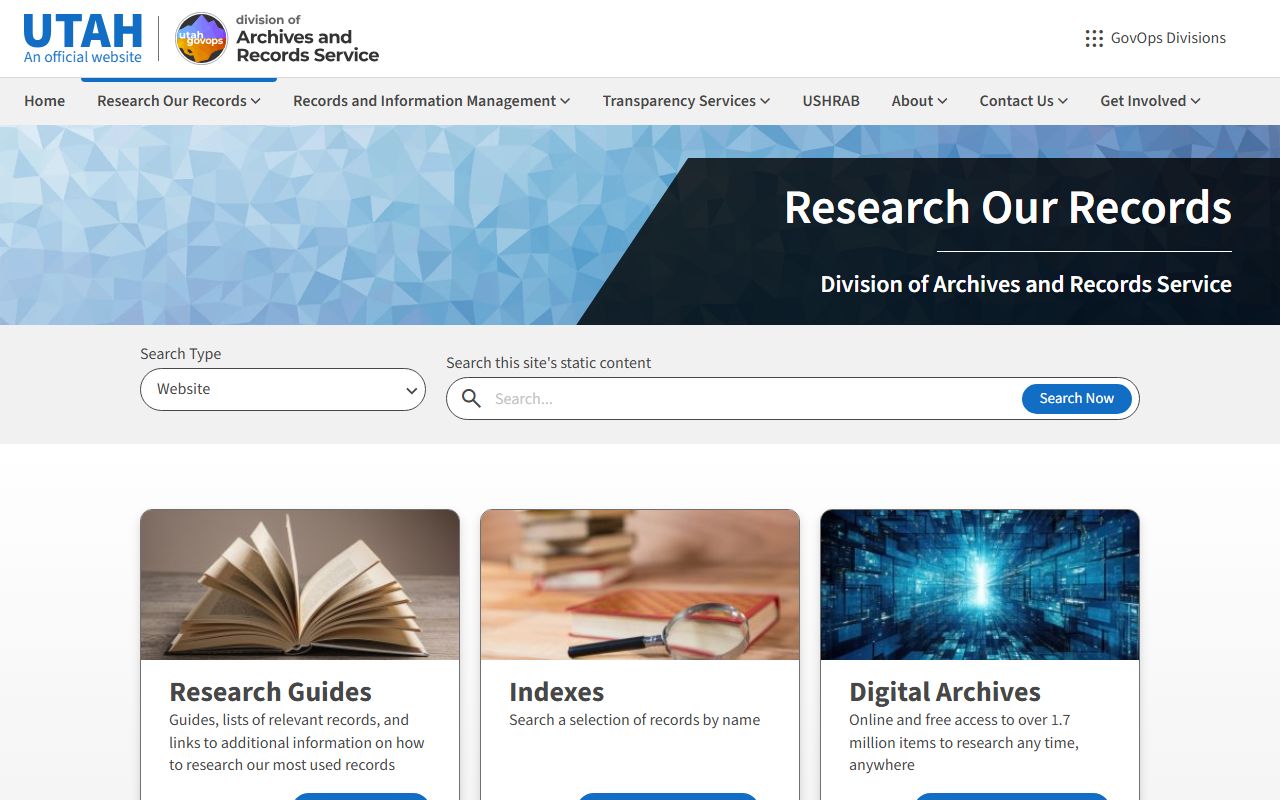
That archives view is useful for Salt Lake County marriage records from the nineteenth century and the early twentieth century.
Salt Lake County Marriage Law
Utah law also controls the timing. The Legislature's marriage-license provisions say the license is valid immediately after issuance and expires after 32 days if it is not used. The officiant must also return the signed license within 30 days after the ceremony. Those rules matter because they explain why the county clerk tracks both the application and the return date.
Utah Code section 30-1-10 carries the timing rule for a license that can be used at once and expires after 32 days if unused. For a Salt Lake County record search, that timing helps you match the license to the ceremony and then to the returned file.
The 30-day return window also explains why a county copy may not appear instantly after the wedding. The file has to be signed, returned, and entered before the clerk can treat it as the final marriage record. If you are checking a recent marriage, that small delay is normal.
For county-level record work, the practical rule is simple: the clerk issues the license, the officiant returns the signed license, and the county records the completed marriage. That sequence is what turns the office visit into a public record that later searches can find.
More Salt Lake County Marriage License Help
A Salt Lake County Marriage License search works best when the county clerk stays at the center of the process. The clerk issues the license, receives the returned record, and remains the first county office to check when you need to confirm that the marriage file exists. If the details are thin, the county's historical tools and statewide sources can help narrow the search, but the local marriage division remains the anchor point.
The Salt Lake County clerk also keeps a separate Mutual Commitment Registry, but that is not the same thing as a marriage license. If your goal is the legal marriage file, stay focused on the clerk's marriage division and the historical marriage index rather than on other county programs.
For legal background, Utah Courts and the Utah State Law Library can help you understand the state rules that sit around the record. For older family history work, FamilySearch can be useful as a guide to names and dates before you go back to the county file. These resources do not replace the county marriage record, but they can make the search much easier when the details are thin.
The best approach is simple: use the county clerk for the live record, the archives for the older index, and the state resources when you need context around the record or a historical lead that is not obvious from the clerk's office alone.
When the record is for a Salt Lake County marriage, the clerk's office remains the anchor point, and the other resources are there to help you fill in the gaps.
Cities in Salt Lake County
Salt Lake County includes several cities and towns. Residents from across the county use the Salt Lake County Clerk's Marriage Division for licenses and marriage records.
Salt Lake City is the largest city in Salt Lake County and the state capital. The county clerk office in Salt Lake City handles the marriage record trail for the entire county.
Nearby Counties
Salt Lake County borders several other Utah counties. If you are not sure which county handled a marriage record, check the ceremony location and the county where the license was issued.