
Find Sandy Marriage License
Sandy sits at the base of the Wasatch Mountains, and that location often shapes how people begin a Marriage License search. Some start with the city name because they know the couple lived in Sandy, held the ceremony nearby, or used a local landmark as the clue that points them toward the record. The city site helps with that first step, but the actual license and later copy still run through Salt Lake County. This page keeps the search local, shows which office holds the record, and points you toward the county sources that matter when you need the file itself.
Sandy Quick Facts
Sandy Marriage License Office
Sandy residents do not get a Marriage License from the city recorder desk. The city page is still useful because it confirms the local government side of the search, but the license itself comes from Salt Lake County. That split matters when you are trying to find a copy or confirm where the marriage was filed. The county clerk is the office that receives the application, issues the license, and keeps the returned record. If you start with Sandy and stay with Sandy, you may miss the office that actually holds the file.
Use the Sandy City government page as the first local checkpoint. It gives you the city context without replacing the county office that handles the Marriage License. Once you know you are in the right city, move to the county clerk and the county marriage division for the real record trail.
See the Sandy City government page screenshot for the city starting point.

That homepage is a clean starting point when you need to anchor the search to Sandy before moving to Salt Lake County.
The Salt Lake County Clerk overview is the next office source to open because it shows where the county keeps marriage work. For a Sandy Marriage License search, that county office is the real endpoint, not the city home page.
Search Sandy Marriage License
A Sandy Marriage License search works best when you begin with the simplest facts first. Names, an approximate year, and the city or venue usually matter more than a perfect memory of the exact date. If you know the officiant, that can help too. Salt Lake County can often narrow the record from those clues because the clerk office keeps the filing trail tied to the people, the place, and the date that were written on the application and return.
The Salt Lake County Clerk Marriage Division page is the best match for that search. It keeps the county marriage process in one place and shows the office that issues licenses for Sandy residents. When you are not sure whether the record is recent or older, the marriage division page helps you stay with the correct office before you start asking for copies.
See the Salt Lake County Clerk Marriage Division page screenshot for the county office that handles the search.
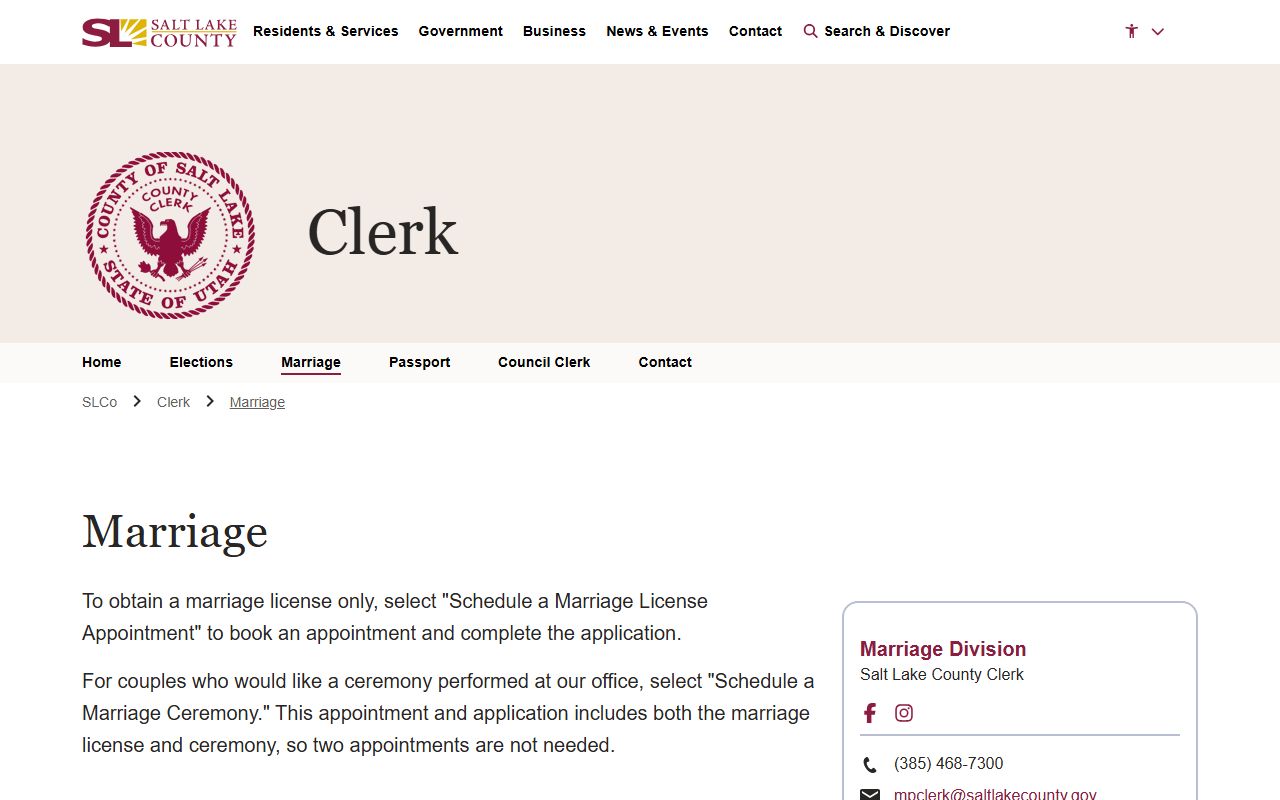
The county marriage page is the clearest bridge between a Sandy clue and the office that actually keeps the record.
That difference is easy to miss when you are searching by city name alone. Sandy City can tell you which office serves the city, but Salt Lake County is where the Marriage License record lives. Keep the county name in view and the search becomes much easier to manage.
Sandy City Recorder
The Sandy City Recorder is useful when you need a city record question answered, but it does not replace the county clerk for a Marriage License. That is the main distinction to keep in mind. City records, meeting files, and local government documents belong on the municipal side. The marriage record, the license, and the later certified copy belong on the county side. If you want the right office the first time, use the recorder for Sandy city matters and the county clerk for the marriage file.
The city recorder page at sandy.utah.gov/cityrecorder is the local reference point. It helps you separate a city request from a county marriage request, which saves time when a search begins with a family name and a rough date rather than a file number. That is especially useful for people who know the wedding happened in Sandy but do not know which office filed the document after the ceremony.
See the Sandy City Recorder screenshot for the municipal records side of the search.
The recorder page is a good reminder that Sandy has its own city records path, while Salt Lake County keeps the marriage record itself.
If you are not sure which office to call, start with the county clerk for the Marriage License and use the city recorder only when the question is clearly about a Sandy municipal file.
Sandy Marriage License Process
Utah law sets the basic steps for every Sandy Marriage License. Utah Code section 30-1-4 says the license comes from the county clerk, and section 30-1-8 covers the certificate and return process that closes the file after the ceremony. That means the record starts with the county office, not with the city, and it ends there too once the signed document comes back.
For Sandy residents, that process usually feels straightforward. You apply through Salt Lake County, receive the license, hold the ceremony, and then wait for the return to be logged. The county marriage division is the office that tracks those steps. If you are preparing a new search, the county page is the right place to confirm the current office routine before you make the trip.
The county marriage page at saltlakecounty.gov/clerk/marriage is the best source for that process. It keeps the application and record path together so you can move from the first visit to the later copy request without guessing which department owns the file.
When the paper is returned, the record is much easier to find later. That is why the county office matters so much. The returned license is the bridge between the ceremony and the public record.
Sandy Marriage License Records
Once the ceremony is complete, the signed Marriage License becomes the county record that later searches rely on. If you need a copy for a name change, a family file, or simple proof that a marriage was recorded, Salt Lake County is the office that should stay at the center of the search. The county clerk keeps the record because that is where the license was issued and returned. That is also why the office can often find the document from just the names and an approximate date.
Utah Code section 30-1-15 is the public record rule that supports inspection and copying of county marriage records. For Sandy residents, that means the record is normally available through the county clerk rather than through a separate city archive. If you are tracing a recently filed record, give the county time to finish processing the return before you expect the copy to appear.
The Salt Lake County historical page at the Utah State Archives helps when the record is older and the county clerk needs a historical index instead of a current file. That is a useful next stop if you already know the marriage happened long ago, or if a family story gives you only a rough date and a surname. The archives do not replace the county, but they can narrow the trail and show you where the older record series sits.
See the Salt Lake County historical page at the Utah State Archives screenshot for the older-record path.
The historical page is especially helpful when a Sandy Marriage License search turns into a county archive search. It gives you a place to start before you ask the clerk for a copy or a record number.
More Salt Lake County Resources
Sandy sits inside Salt Lake County, so the county site is the main source when the search moves beyond the city record. The Salt Lake County Clerk overview explains where the marriage division fits inside the larger office, while the Salt Lake County Clerk Marriage Division page shows the actual license path. Those two pages are the clearest county references for people who started with Sandy but still need the legal file.
The state statute pages add the legal frame around the county record. Utah Code section 30-1-10 explains the 32-day use window, and the public-record rule in section 30-1-15 explains why the returned document can be copied later. Together, those rules explain why a Sandy search may begin with a city clue, then move to the county clerk, and finally end with a copy request or a historical lookup.
If you want to continue to the county page, use the button below.