
Wayne County Marriage License Records
Wayne County sits in south-central Utah, with Loa as the county seat and landscapes that include parts of Capitol Reef National Park and the Aquarius Plateau. If you need a Marriage License, the Wayne County Clerk is the office to start with because it is the local point for issuance and official record keeping. That county-level path matters in a rural county like Wayne, where the right office is often easier to identify from the county government site than from a general search result. This page keeps the search focused on Wayne County, the Utah State Archives, and FamilySearch so you can move from a current clerk request to a historical index with the county context still intact.
Wayne County Quick Facts
Wayne County Marriage License Office
The Wayne County Clerk is the office that issues Marriage Licenses and maintains the official county records after the paperwork comes back. That makes the clerk page the best starting point whether you are checking a recent filing, looking for a certified copy, or trying to confirm whether a family story belongs in Wayne County at all. The county homepage helps with the broader government structure, but the clerk page is the place that controls the marriage record trail from the start. In a county where many searches begin with a place name rather than an office name, that distinction saves time.
See the Wayne County Clerk page for the official office entry point for Marriage License work in the county.
The clerk page is the right anchor because Wayne County handles the record at the county level, not through a city department or a separate state office.
The broader Wayne County government website is useful when you need the county service structure around the clerk, especially if you are starting from a general county contact or a county-seat reference in Loa.
That county homepage matters because it keeps the Marriage License search inside Wayne County government instead of sending you to an unrelated source that cannot issue or preserve the file.
| Office | Wayne County Clerk |
|---|---|
| County Seat | Loa |
| Region | South-Central Utah |
| Historical Range | Miscellaneous Marriage Records Index, 1860-1940 |
| Website | wayne.utah.gov/clerk |
Wayne County Marriage License Application
A Wayne County Marriage License starts with the county clerk and the application details that let the office connect the couple to the later county record. Because Wayne County is spread across a large rural landscape, it helps to gather the full legal names, the approximate date, and the county before you contact the office. If your only clue is a place like Capitol Reef or the Aquarius Plateau, convert that memory back to Wayne County and then ask the clerk for the record path. The county office is the point where a local memory becomes an official filing.
The county government site is also useful here because it keeps the application path tied to the right office. If you are checking whether a request belongs in Wayne County, the clerk page is the administrative answer and the county homepage is the broader navigation tool. Together they help you avoid starting with a general search engine result that cannot tell you whether the ceremony, the application, and the return all belong to the same county file.
If you are helping a family historian, a legal requester, or someone who only remembers the location loosely, start with the county name and the rough year. That is usually enough to tell the clerk whether the request belongs in current records, archival material, or an indexed historical source.
Wayne County Marriage License Rules
Utah law provides the framework that Wayne County follows. Section 30-1-4 places the license with the county clerk, and section 30-1-8 ties the application to the returned certificate after the ceremony. Those two rules explain why the clerk office matters at both ends of the record trail. The office issues the license first, then receives the completed record later, which is why a Wayne County Marriage License search almost always starts and ends with the county clerk.
Section 30-1-10 sets the 32-day use window. That matters whenever you are checking whether a ceremony date should already have produced a returned county record. If the license was not used in time, the office trail changes, and the request may need a closer look before anyone assumes a copy should exist. For a rural county search, that timing detail can save a lot of back-and-forth.
Section 30-1-15 is the public-record rule that keeps completed county marriage records available for inspection and copying. The Utah State Archives marriage guide is the best companion to that statute because it explains how county marriage records fit into the broader Utah system. Used together, the statute and the archives guide tell you which office issued the license, how long it stayed valid, and where the returned record should live afterward.
Wayne County Marriage License Records
The official historical home for Wayne County marriage research is the Utah State Archives county records page at archives.utah.gov/research/county-records/wayne. That page matters because the archives notes for Wayne County say the Miscellaneous Marriage Records Index includes Wayne County records for the 1860-1940 period. If you are dealing with an older marriage, that index can be the bridge between a vague family reference and a usable county lead. It is especially helpful when the record is old enough that the county clerk file is not the first place to start.
See the Utah State Archives research portal screenshot below for the statewide search environment that supports Wayne County record work.
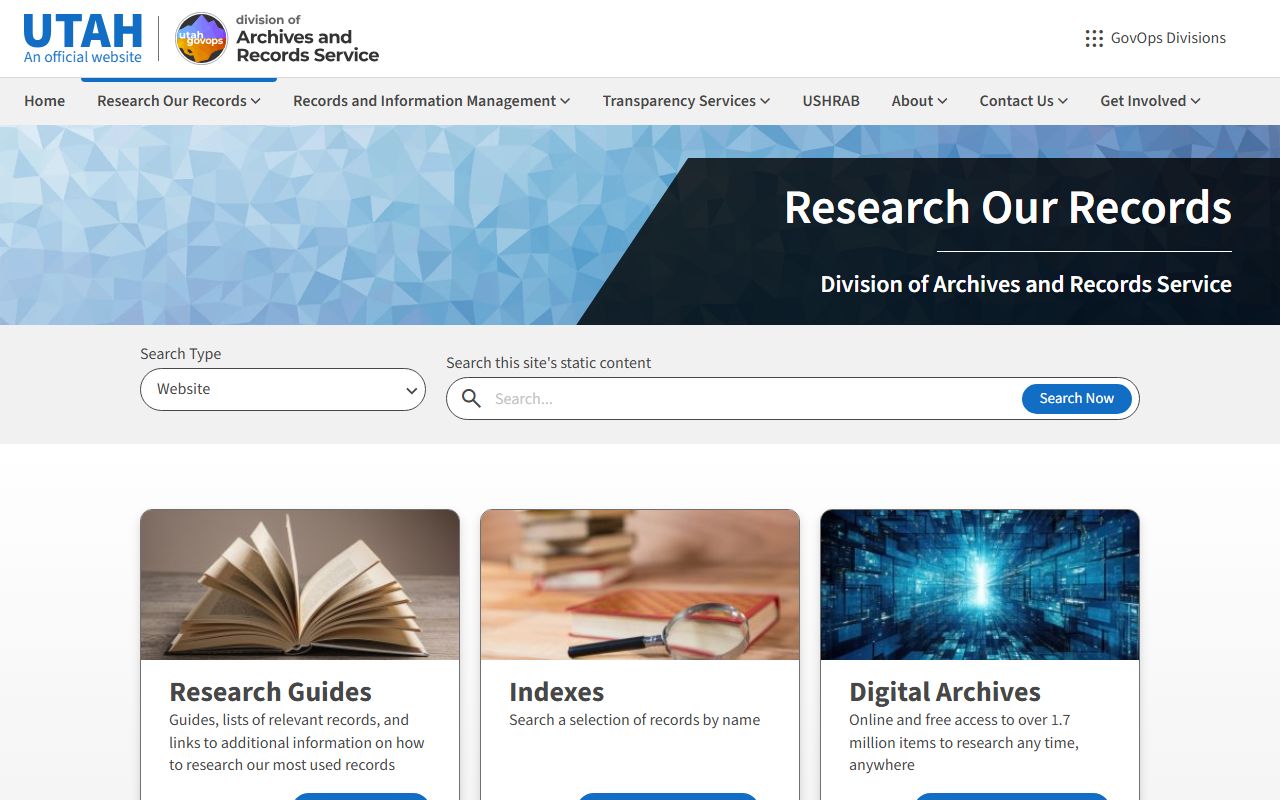
The archives portal is useful because it gives you a statewide path for historical searching while still keeping Wayne County in view. That is valuable when the record is older, the surname is common, or you only know an approximate date and need the official index before you request anything from the county clerk.
FamilySearch is the other major historical companion source. It can help you confirm a spelling variant, identify a likely spouse, or narrow a date range before you contact the county. That does not replace the clerk or the archives, but it often gives you enough structure to ask a better question. For Wayne County, where the historical index range is clearly defined, FamilySearch is most useful as a lead generator rather than as the final record holder.
Loa and Wayne County Context
Loa gives the search its county-seat anchor, but it does not replace the county clerk. That distinction is important because a lot of Wayne County references start with a town name, a park location, or a landscape clue instead of a government office. If you know the ceremony happened near Capitol Reef National Park or somewhere across the Aquarius Plateau, the next step is still to bring that memory back to Wayne County and the clerk office that maintains the record. The county seat gives you the local context, but the clerk gives you the actual file.
The county homepage is helpful when you need to orient yourself around the government structure in Loa. That is often the fastest way to distinguish between a local place reference and the office that created the Marriage License record. If you are trying to match a certificate to a family story, the town name may be enough to get you to Wayne County, but the clerk page is what gets you from the county seat to the official record trail.
This context also matters because Wayne County is geographically distinct from Utah's larger urban counties. People often remember the setting first and the office second. Keeping Loa, the county seat, and the county clerk in the same mental frame usually makes the search more accurate.
Historical Wayne County Marriage Records
Older Wayne County marriage research usually works best when you combine the county archives page with FamilySearch and the county clerk. The archives page tells you how the historical record set is organized, while FamilySearch can supply an index clue that helps you identify the right couple before you ask for a county copy. That combination is especially helpful when the record dates are broad, the surname appears in several families, or the only clue you have is a town, trail, or ranch location somewhere in south-central Utah.
The FamilySearch site is worth using because it supports genealogical research as well as public-record searches. For Wayne County, that means it can give you a family line, a name variant, or a likely time period that makes the county request more precise. Once you have that clue, the county clerk and the archives page can do their jobs faster because they are not guessing at the names or the date window.
Wayne County's historical range is also important on its own. The Miscellaneous Marriage Records Index covering 1860-1940 means there is a long historical corridor to search, not just a recent filing stack. If the marriage is from the late 19th or early 20th century, the archives page is often the most efficient official source to check before you make a direct request to the county office.
More Wayne County Marriage License Help
If your Wayne County Marriage License search is still open, keep the county clerk at the center of the process. The clerk issues the license, receives the completed record, and maintains the official county file. The county homepage helps you find the current government path, while the archives page and FamilySearch help when the record is older or the spelling is uncertain. That division of labor is what keeps a Wayne County search efficient instead of scattered across unrelated websites.
The best next step is usually simple: use the clerk for the live record, the county homepage for office navigation, the archives for historical indexing, and FamilySearch for a surname or date lead. If you are trying to match a family story to an official document, start with the county seat of Loa and work outward from there. The county office, not the geography, is the place that turns the Marriage License into a record you can request later.
Wayne County Clerk | Wayne County Homepage | Utah State Archives Wayne County | Utah State Archives Marriage Guide | FamilySearch