
Washington County Marriage License Search
Washington County sits in southwestern Utah, with St. George as the county seat and a service area that pulls in both longtime residents and newcomers drawn by the warm climate and proximity to Zion National Park. People usually search here when they need to locate a county marriage file, verify where a license was issued, or find the office that keeps the official copy after the ceremony is complete. The county clerk is the main starting point for that work, and the county pages, state archives, and Utah Code references below help separate a current request from an older record search.
Washington County Quick Facts
Washington County Marriage License Office
The Washington County Clerk is the official office for a new Marriage License and the record that comes back after the ceremony. The county marriage information page is the best place to confirm the current local process, because the clerk handles both the issue side and the record side of the file. That matters in St. George and throughout the county, since the same office is where the application starts, the license is issued, and the completed record is kept for later requests.
When you start with the county clerk, you are using the office that actually controls the local marriage paper trail. The Washington County homepage and clerk page both point back to that office structure, which is helpful when you need the marriage desk rather than a general county contact. That separation keeps the search focused on the place where the official file lives instead of on unrelated county services.
See the St. George city website screenshot below, which helps set the local context for the county seat and the Marriage License search.

That city-site view is useful because St. George is the county seat and the local government context often points people toward the county clerk. It is a reminder that the city helps orient the search, but the county clerk keeps the actual marriage file.
The Washington County marriage information page is the next official stop when you want the clerk's Marriage License instructions and record path in one place.
The marriage page is the clearest official entry point when you want one office that ties the application, the ceremony, and the final county record together.
Search Washington County Marriage License
Once you know the marriage happened in Washington County, the next step is usually a name-based search through the clerk's records. A county search works best when you already know the couple's full names, the approximate year, and the city or venue where the ceremony happened. If you also have a license number, the office can move much faster, but that number is not always necessary when the names and date range are clear.
Washington County searches often begin with a local clue and then widen to the whole county. That is especially true in St. George, because the county seat and the largest city are the same place and many local requests start from city records, family papers, or a recent residence file. The clerk is still the office that matters for the official Marriage License copy, so the search should always circle back to the county record book.
The county clerk page is also the place to separate a live request from a historical lookup. A current license search is about a recent application or a certified copy, while an older search may need the archives or a paper index to find the right entry. That distinction saves time because it tells you whether the answer should come from the clerk's current file or from a state historical source.
Washington County Marriage License Process
Utah law places the Marriage License with the county clerk, and Washington County follows that same rule. Under Utah Code section 30-1-4 and section 30-1-8, the clerk is the office that issues the license after the application is filed and the identifying details are collected. That is why Washington County residents usually work through the clerk rather than trying to treat the city as the issuing office.
The county process matters because the application is the start of the official record. Once the clerk issues the license, the couple uses it for the ceremony and the signed document returns to the county as the recorded file. The office path is simple on paper, but it is the key to understanding why later record requests need the county clerk rather than a city department.
Washington County's official website is a useful place to confirm the current office path before you visit. The county pages do not change the law, but they do show how the clerk handles the marriage service in real time. That helps when you want to verify the current filing process, the right office name, or the marriage section that keeps the record after the ceremony.
The Washington County homepage is a useful county-level reference when you want the broader government structure behind the Marriage License service.
The homepage is a useful fallback when you need the county government path before you drill down to the marriage desk.
Washington County Marriage License Records
After the ceremony, the signed Marriage License is returned and becomes the county record. That returned document is the official county file, which is why a later search should begin with the clerk rather than with a general web search. The record can show the names, the license date, the ceremony date, and the filing trail that proves the marriage was entered in the county's system.
Marriage records are public records in Utah, and the state statute most directly tied to that access is Utah Code section 30-1-15. For a Washington County search, that means the clerk's office keeps the file available for copying and record confirmation instead of treating it as a private document after the return is complete.
When the county file is not enough on its own, the broader Utah record system can help. The state archives research portal and the Utah vital records site are useful backstops when a search needs a statewide route, a historical guide, or a reminder about where an older copy might have been indexed. The county clerk remains the first stop for the actual Washington County record, but the state resources help when the county clue is thin.
See the Utah Archives research portal screenshot below for the statewide record-search context.

The state archive view is the best backstop when a Washington County Marriage License request needs a broader historical or research-oriented path.
Historical Washington County Marriage Records
Older Washington County marriage work often starts with the archives rather than the live clerk line. The county-specific archive collection helps when a name, year, or family story points to an older record that is not obvious from a current office search. That is useful for genealogists and for anyone trying to match a later copy to a paper-era filing.
The Washington County archives page is especially helpful because it keeps the local record trail tied to a known county and a known office history. Even when the archive page is not the final answer, it often gives the best clue about how the older record series is organized. If you only know a surname, the archives can be the most efficient way to narrow the range before asking the clerk for a copy or confirmation.
Washington County has a record history that reflects both the county seat in St. George and the wider southwest Utah region. For that reason, the archive trail can be useful when the same family name appears in church records, cemetery references, or a later land file and you need the marriage entry that ties the record set together.
See the Washington County archives page screenshot below for the county historical-record context.
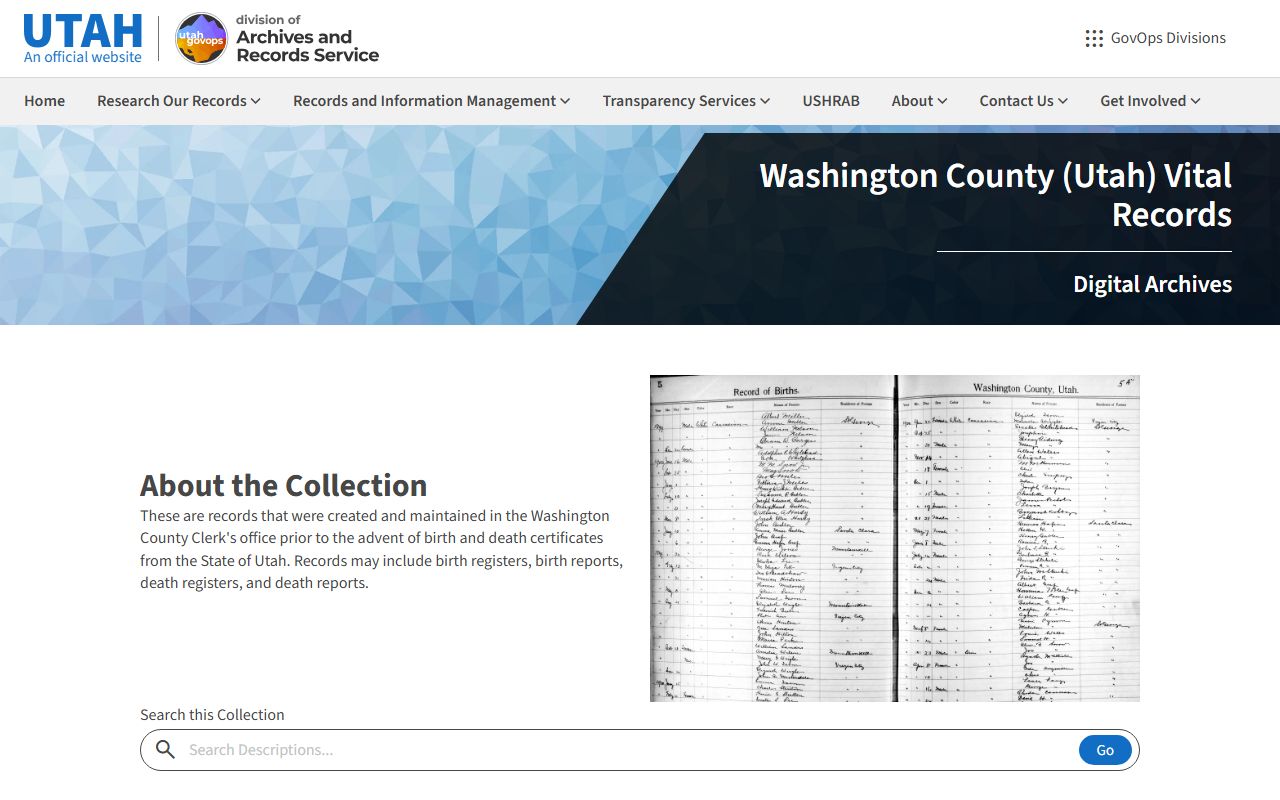
That archive view is useful when the county clerk needs an older index or a historical lead before a Marriage License copy can be found.
More Washington County Records
A Washington County Marriage License search often leads to other public records. The county clerk can connect you to the official marriage copy, while the county homepage and state resources can help you identify the next office when the request expands into property, court, or family-history work. That is common in a place like St. George, where a recent move, a home purchase, or a name change can all point back to the marriage record.
For state-level context, Utah Courts helps when you need to understand the marriage-law framework, and Utah Vital Records is a useful statewide resource when the request belongs in a broader record system. Those links do not replace the county clerk, but they help you decide whether the search belongs in county files, state files, or a court-related record trail.
When the marriage record is the target, the best path is still simple: start with the Washington County Clerk, use the archives when the file is old, and use the state resources when the search needs a wider official reference point. That combination keeps the request tied to the office that actually issued and recorded the Marriage License.
The county seat, the climate, and the tourist traffic around Zion all make Washington County a place where people move quickly and records matter quickly too. A clean county record search gives you the local answer without forcing you to guess which office owns the file.
Washington County and St. George
St. George is the county seat, so many Washington County Marriage License searches naturally start there even though the county clerk keeps the actual record. That local connection is useful when you are working from a city address, a city event, or a family reference that only names St. George. The city site can orient you to the local government side, but the county clerk is the office that issues and records the license.
The city context also helps when you are comparing sources. A St. George page may give you the location and local-government frame, while the county clerk page gives you the official marriage record path. Putting those together is often the fastest way to move from a vague local reference to the exact county file.
For a Washington County Marriage License search, the rule is straightforward: city information can point you in the right direction, but the county clerk is where the legal record lives. That distinction is what keeps a search efficient and keeps the request from getting lost in the wrong office.