
Wasatch County Marriage License Records
Wasatch County is in north-central Utah, with Heber City as the county seat and Heber Valley as the local backdrop for recreation, travel, and year-round events. If you need a Marriage License record, the county Clerk-Auditor office is the source that matters because it issues the license and keeps the county record trail. That makes the official clerk page, the county homepage, the Heber City website, and the state archives guide the best places to begin. This page keeps the focus on the license itself, the application steps, the Utah timeline rules, and the official record paths that help when you need a copy or a historical reference.
Wasatch County Quick Facts
Where to Start with a Wasatch County Marriage License
The Wasatch County Clerk-Auditor office is the place to start because it is the county office that issues the Marriage License. The county combines the clerk and auditor functions in one office, and the clerk side handles marriage licenses, elections, agendas, ordinances, and other official county records. The physical office is at 25 N. Main St. in Heber City, and the published phone number is 435-657-3190, so the search begins with a real county office rather than a guess based on a city address or a generic Utah search result.
That matters in Wasatch County because the county seat, Heber City, sits in the middle of a valley that draws residents, travelers, and recreation traffic from a wide area. Someone starting with a wedding venue, a mountain lodge, or a city event may not immediately think of the county clerk, but the marriage record still belongs to the county. The county's marriage page gives you the application path, the fee, and the copy information in one place, which makes it the most efficient first stop for a live record search.
The Wasatch County marriage page at wasatchcounty.gov/181/Marriage-Licenses is the clearest place to confirm the application steps before you visit Heber City. The screenshot below shows that official page and keeps the license rules close at hand.
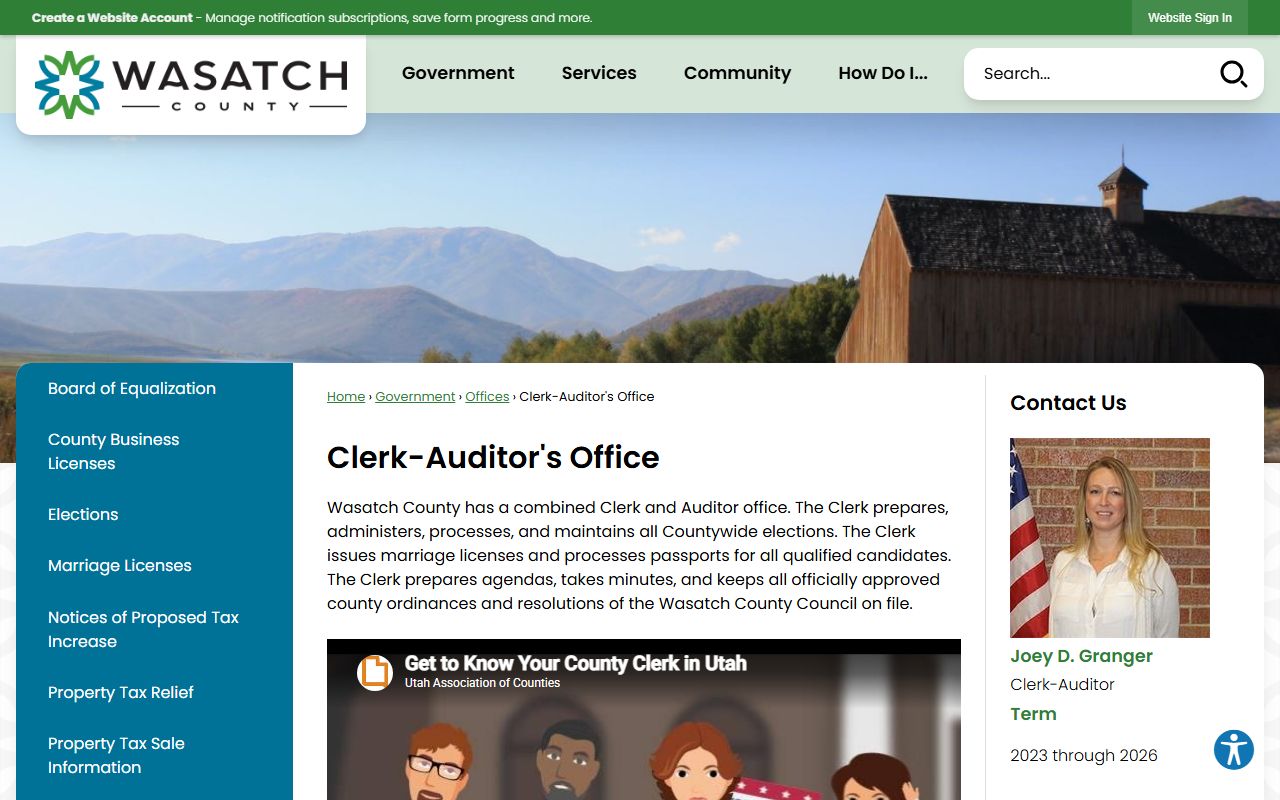
That page is the county source for the live license step, so it is the right place to verify the basics before you make the trip.
| Office | Wasatch County Clerk-Auditor's Office |
|---|---|
| Location | 25 N. Main St. Heber City, UT 84032 |
| Phone | 435-657-3190 |
| Clerk Page | wasatchcounty.gov/181/Marriage-Licenses |
| County Home | wasatchcounty.gov |
| Related Services | Marriage licenses, elections, passports, public records requests, ordinances |
Wasatch County Marriage License Application
Wasatch County's marriage page tells applicants to complete the Marriage License form, print it, bring it to the clerk's office, and not sign it until instructed by staff. That sequence is important because it keeps the application valid and avoids wasting time with a form that has been signed too early. Both parties must also appear in person with a valid picture ID, which matches the statewide approach in Utah Code section 30-1-4 and the application-and-return structure in section 30-1-8.
The county page also makes clear that the application process is more than a quick office stop. It is the start of the official paper trail that later supports a name change, a certified copy request, or another county records search. That is why it helps to arrive with the form completed, a valid ID, and the names and dates you expect to see on the final record.
That level of detail is useful because it shows the county is not just issuing permission to marry. It is building a complete record path. If you arrive with a blank application, a valid ID, and the correct fee, you reduce the chance that the clerk will have to stop the process for a missing detail. If you are helping someone else search, the full legal names, the expected ceremony date, and the county office should be the first facts you confirm.
The county page is also the best reminder that the marriage license is a county record first and a family paper trail second. The clerk office keeps the system organized, which is why the application instructions are so precise. For a record search, the instructions on the official page are often as important as the certificate itself because they tell you how the record was created.
Wasatch County Marriage License Rules
Utah law sets the core rule that controls the life of a Wasatch County Marriage License. Under section 30-1-10, the license is valid for 32 days after issuance, so the ceremony has to happen inside that window. That rule matters whether the wedding is in Heber City, around the lake, or at another Utah location entirely, because the county issues the license but Utah law controls where and when it can be used.
If the license is not used, the Wasatch County page says it should be returned to the clerk's office. That return step is part of the record trail, and section 30-1-8 is the statewide rule that keeps the finished certificate tied to the issuing clerk. In practice, that means the county keeps the returned record even though the ceremony may have happened somewhere else. It is also why the clerk office is the right place to ask for a local copy after the marriage is complete.
Section 30-1-15 makes county marriage records subject to inspection and copying. That is the rule that turns the completed marriage record into a public county record once the filing is done. For searchers, that means the marriage file can move from a live office transaction to a copy request or records search without losing its county identity.
The Wasatch County homepage at wasatchcounty.gov is the other official checkpoint that helps you stay oriented. The screenshot below shows the county homepage, which is useful when you want to move between the clerk page, the county's public records links, and the other services that sit around the marriage office.
That homepage is the right place to regroup if you need to move from the license page to another county service after the ceremony.
Heber City and Wasatch County Records Context
Heber City gives the county seat context, but the marriage license still comes from the county clerk. That distinction matters because people often start with the city name when they think about the venue, the neighborhood, or the local address, then discover that the actual record source sits one layer up at the county office. The Heber Valley setting makes that even more common because visitors often remember the town first and the county second. The clerk page and county homepage keep the record trail anchored at the right level.
The Heber City website at heberut.gov is a useful local reference when you need to orient a search around the county seat or a city event. It does not replace the county clerk, but it helps you confirm the local setting before you return to the office that issued the license. That is especially useful for a marriage search that starts with a lodge, a downtown address, or a community event in the valley. The city page can tell you where the search began, while the county page tells you where the record belongs.
The Heber City screenshot below is a good visual reminder that the city and county are linked by geography but not by record custody. The city is local context; the county clerk is the issuing office.
That city view is most helpful when the search begins with a venue, an address, or a local event and needs to be tied back to the county file.
Wasatch County Marriage License History and Archives
If the marriage is older than the current clerk file, the Utah State Archives is the right historical companion to the county office. The general marriage research guide at archives.utah.gov/research/guides/marriage/ explains that most marriage applications and licenses remain with county clerks and that the Archives keeps only a limited number of county records. That means the Wasatch County clerk is still the primary source for a current or recent record, while the Archives becomes useful for historical searches, indexes, and collections that point back to the county.
The county-specific research page at archives.utah.gov/research/county-records/wasatch is the best archival starting point when you are trying to determine whether the record has remained with the county or is available through a historical reference. That page matters most when the search begins with a family name and an approximate date rather than a modern certificate number. It can help you tell the difference between an active county file and an archival reference that only points to the original county document.
For Wasatch County researchers, the practical method is simple. Start with the clerk page if the marriage is recent, move to the county archives page if you need a historical trail, and use the statewide marriage guide if you are not sure which office should hold the document. That keeps the search focused on the official source that created the record rather than sending you into unrelated county records or non-government indexes. The county office created the record, and the archives help explain where that record should be found now.
More Wasatch County Marriage License Help
For most Wasatch County searches, the best workflow is straightforward: complete the application, bring it to the clerk's office, show valid photo identification, pay the fee, and make sure the 32-day window still fits your ceremony date. After the marriage, the returned certificate should go back to the county clerk, and that is the office to contact if you need a county copy or want to confirm that the record was filed. The county website also gives you a GRAMA path if your question is broader than the Marriage License itself.
The county public records request page at wasatchcounty.gov/185/Public-Records-Request-GRAMA is the official route when you need records that are not part of the standard marriage application path. That matters because marriage searches sometimes expand into name-change work, property questions, or other county files after the ceremony is complete. In those cases, the clerk office still matters, but the public records link can be the right next step when you need something broader than a marriage copy.
That is the central idea for Wasatch County: stay with the Clerk-Auditor office for the live license, use the county homepage and city site for context, and move to the archives only when the record is old enough that the historical trail matters more than the current office copy.