
Sevier County Marriage License Records
Sevier County sits in central Utah, and Richfield is the county seat. If you need a Marriage License record, the right first stop is the county clerk page because that is where the live application, return, and copy trail begin. The Utah State Archives marriage guide is the next useful reference because it explains how county clerks, archival collections, and FamilySearch fit together for Utah marriage research. For Sevier County, that means keeping the search tied to the county office, the statewide rules, and the historical sources that help when the record is older than the modern clerk file.
Sevier County Quick Facts
Sevier County Marriage License Office
The Sevier County Clerk page is the place where a live Marriage License search begins because the clerk is the office that issues the license and keeps the county record trail. The county homepage is the broad official entry point, but the clerk page is the more direct route when you need current office instructions. That distinction matters in a county like Sevier because the record belongs to the county first, not to a city office or a statewide index. If you start with the clerk, you are starting with the agency that actually creates and maintains the file.
Richfield is the county seat, so a Sevier County Marriage License search should stay oriented around the county government rather than a general central Utah search. The county page helps with the live application path, while the archives guide helps with older material and the statewide record structure. That is the simplest way to keep the search accurate if you are helping a couple, a genealogist, or a family member who only remembers the county name and an approximate year.
See the Utah State Archives marriage guide for the statewide record structure that surrounds a Sevier County Marriage License search.
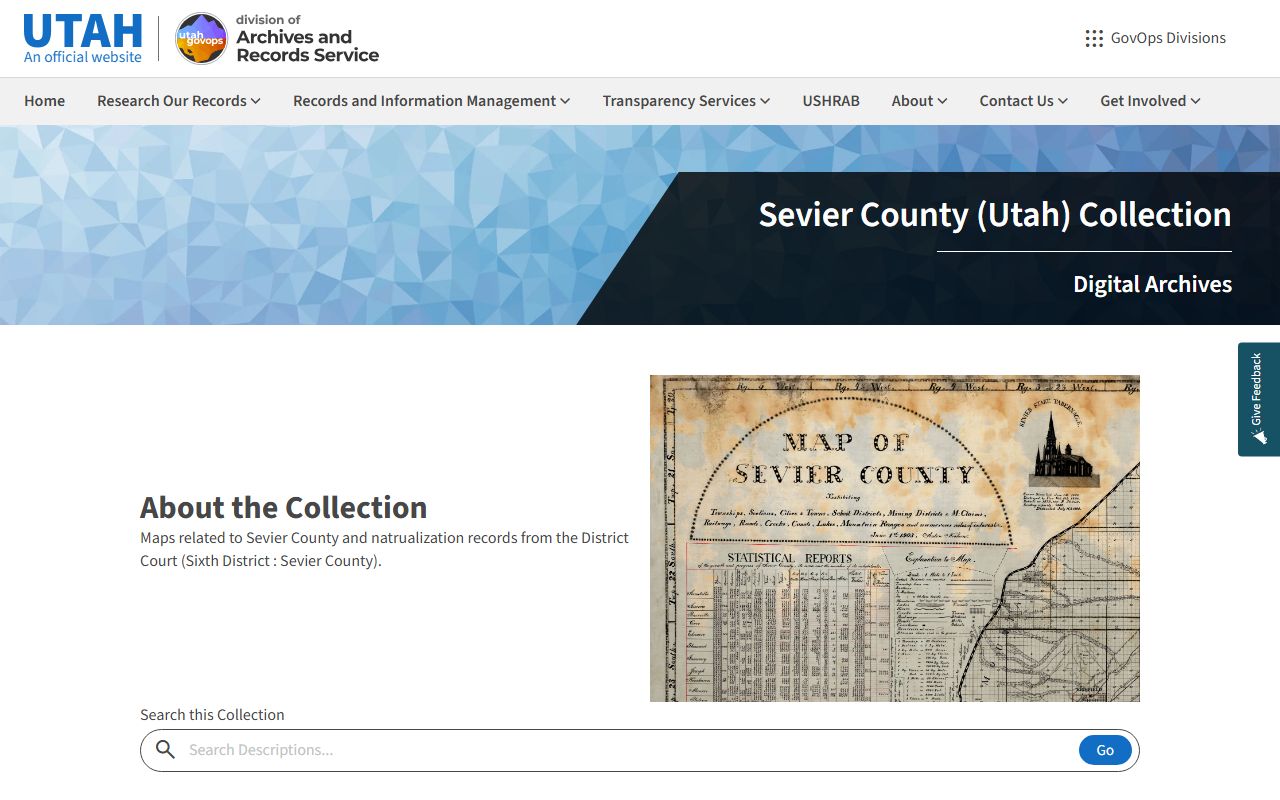
That archives view is useful because it shows how Sevier County fits into the broader Utah marriage record system, where county clerks usually keep the live file and historical sources help with older research.
| Office | Sevier County Clerk |
|---|---|
| County Seat | Richfield |
| Primary County Links | County Clerk and County Homepage |
| Historical Guide | Utah State Archives Marriage Guide |
| Research Aid | FamilySearch |
Sevier County Marriage License Application
Utah Code section 30-1-4 places the license with the county clerk, and section 30-1-8 ties the application and the return back to that same office. For Sevier County, the practical meaning is straightforward: the county clerk is not just a pass-through point. The clerk is the office that starts the Marriage License file and expects the completed record to come back after the ceremony. If you are searching for a live or recently returned record, the office that issued the license is the office to contact first.
That application step is also where many searches succeed or fail. The county needs the correct names, the correct date range, and enough identifying detail to separate one couple from another. That is why full legal names, approximate marriage dates, and the county seat matter. A family story that only says "married in Sevier County" is a clue, but it is not enough for a clean request. The clerk can work with a broad lead, but the more complete the details are, the easier it is to connect the issue date, the ceremony date, and the returned certificate.
For older Sevier County Marriage License research, the Archives guide and FamilySearch are especially helpful because they can point you to an index or a historical record image before you contact the county. That is often the fastest way to narrow a search from a county-wide request to the exact couple. Since Utah clerks have handled marriage licenses and certificates since 1888, the county office and the historical sources usually work best together rather than as substitutes for one another.
Marriage License Rules in Utah
Utah law sets the framework that controls a Sevier County Marriage License. Section 30-1-10 gives the license a 32-day use window, so the license is not open-ended after it is issued. Section 30-1-8 is the return rule, which keeps the signed certificate tied to the issuing clerk after the ceremony. Section 30-1-15 is the public-record rule that makes the completed county marriage record available for inspection and copying once the filing is complete.
The Utah State Archives marriage guide adds the historical context that is easy to overlook when you are focused only on one county. Utah civil marriage records generally do not exist before 1887, county clerks have handled marriage licenses and certificates since 1888, and most marriage applications and licenses still remain with county clerks. That means a Sevier County Marriage License search should start with the county office for a recent record and move to the archives or FamilySearch when the record is older or indexed elsewhere.
Those rules also explain why dates matter so much. If the license date, ceremony date, and return date do not line up, the record can be harder to locate. If the dates do line up, the clerk office and the archives can usually tell you whether the record belongs in the active county file or in a historical source. That is the practical value of the statewide rule set. It keeps the search anchored to the right office and prevents a lot of unnecessary guesswork.
Sevier County Records and Archives
The Utah State Archives marriage guide is the most reliable historical companion when a Sevier County Marriage License search needs context beyond the live clerk office. It explains why county clerks remain the primary custodian for most marriage applications and licenses, and it shows how archival references fit around the county record rather than replacing it. That is especially helpful for older family cases, because many researchers begin with a surname, an approximate decade, or a remembered town and need a way to move from a vague clue to the correct record series.
FamilySearch is useful in the same way. It can help confirm a name spelling, an approximate year, or a spouse pairing before you ask the county to look for a copy. When the search starts with incomplete information, the archives guide and FamilySearch can reduce the number of false leads. That makes the county request stronger because you can send a cleaner question to the office that actually holds the file.
See the FamilySearch search tools when you need a surname check or a broader marriage index clue before contacting the county.
For Sevier County, that combination usually works better than a general web search because it keeps the request tied to the county seat, the clerk, and the historical record trail that Utah has used for more than a century.
Richfield and Sevier County Context
Richfield is the practical center of a Sevier County Marriage License search. The county seat is where the clerk office lives, and it is where most people should expect to connect a marriage request to the county government. That matters because the search often begins with a place name remembered from a ceremony, a family story, or a local landmark. The city clue is useful, but the record still belongs to the county office. Once you separate the seat from the jurisdiction, the search becomes much easier to manage.
That county context is also why the official Sevier County homepage deserves attention. A homepage is not as specific as a clerk page, but it gives you the county structure, the office navigation, and the broader set of public services around the marriage record. If you are working on a family history question, the homepage can help you verify that you are dealing with the right county before you ask for a copy or a historical reference.
Sevier County sits in central Utah, so the record search often involves people who remember a wedding in Richfield, a nearby church, or a local travel stop rather than an exact office visit. Keeping the county name, the seat, and the approximate year together is the best way to make the search useful. When those three pieces line up, the clerk, the archives, and FamilySearch can usually support the same record trail without much confusion.
More Sevier County Marriage License Help
If your Sevier County Marriage License question is recent, the county clerk page should stay at the center of the search because that is the office that issues and receives the record. If the marriage is older, the Utah State Archives marriage guide and FamilySearch are the best companions because they help you decide whether the file is likely still with the clerk, indexed somewhere else, or preserved in a historical collection. That division of labor keeps the search efficient and avoids wasting time in the wrong place.
The main idea is simple. Use the Sevier County Clerk for the current record path, use the county homepage when you need the broader official context, use the archives guide when you need a historical map of Utah marriage records, and use FamilySearch when a name or date needs confirmation before you request a copy. That workflow fits the way Utah marriage records are actually created and maintained, and it keeps the search anchored to the office that owns the file.
Sevier County Clerk | Sevier County Homepage | Utah State Archives Marriage Guide | FamilySearch