
San Juan County Marriage License Records
San Juan County is Utah's largest county by area, and it sits in the southeastern corner of the state with Monticello as the county seat. That geography matters because a Marriage License search here often starts with a long drive, a family story from a remote community, or a record clue that points to Monticello instead of a city office. The county clerk is still the source for the live license, the return, and the certified copy path, while the county homepage, the clerk page, the state archives, and FamilySearch give you the rest of the trail. This page keeps the search tied to the official county office that created the record in the first place.
San Juan County Quick Facts
Where to Start with San Juan County Marriage License
The San Juan County Clerk page is the first place to look because it identifies the clerk as the county office that issues marriage licenses and maintains official records. That is the right office for a live Marriage License question, whether you are applying for a new license, checking whether a ceremony was recorded, or trying to confirm that the signed return made it back to the county file. Monticello is the county seat, so the county clerk and the county seat work together as the practical starting point for any local search.
San Juan County also makes the county role clear through its clerk page and county homepage. A Marriage License issued by a Utah county clerk can be used within the statewide legal window, so the county seat is the beginning of the record trail even if the ceremony happens elsewhere in Utah. The county homepage and clerk page give you the same government source from two different entry points, which helps when a family note or venue clue only points to "San Juan" without a street address.
See the official San Juan County homepage below. It is the broad county entry point and shows where the clerk office sits inside the larger county site.
That homepage is useful when you need to move from the clerk page to another county service or confirm that you are still working inside San Juan County government.
| Office | San Juan County Clerk |
|---|---|
| County Seat | Monticello |
| Region | Southeastern Utah |
| County Size Note | Utah's largest county by area |
| Records Office | County Clerk |
| Website | sanjuancounty.org/clerk |
San Juan County Marriage License Application
The clerk page makes the application process easier to understand because it ties the Marriage License directly to the county office that creates the record. That is the practical starting point for a San Juan County Marriage License because the same office that issues the license is also the office that later receives the return and preserves the county file. If you are planning from outside Monticello, that county connection matters because it tells you which office to contact before you rely on a general statewide summary.
Utah law supplies the timing rule that matters most. Under section 30-1-10, a marriage license is valid for 32 days after issuance. That time window matters in a large county like San Juan because travel, weather, and ceremony planning can stretch across a wider area than the county seat itself. If the marriage is being planned from a ranch, a reservation community, or a place far from Monticello, the statewide validity rule is one of the first things worth checking.
The application rules also explain why accuracy matters. The county uses the application details to create the official record trail that later supports copies and historical searching. If you are helping someone search, collect the full legal names, the county, and the expected ceremony date before you contact the office. That saves time and keeps the license trail aligned with the eventual record.
San Juan County makes the license process easier to follow because the clerk page is an official county source rather than a generic records directory. That is the cleanest setup for a live Marriage License request.
San Juan County Marriage License Rules
The statewide statutes are the legal backbone for the San Juan County process. Section 30-1-4 places the marriage license with the county clerk. Section 30-1-8 covers the application and the return of the signed certificate. Section 30-1-10 gives the license its 32-day validity window, and section 30-1-15 makes county marriage records public records subject to inspection and copying. Together, those rules explain why the clerk office matters at both the beginning and the end of the Marriage License trail.
For San Juan County, those rules match the county page in a simple way. The clerk issues the license, the couple uses it within the allowed period, the officiant returns the signed record, and the county later uses that return to support copy requests or record searches. That means the county record is not complete until the return step is finished, which is why the application date and ceremony date both matter when you are trying to locate the file.
The rules are also useful because they help you tell the difference between an active license and a historical file. A live application still sits with the clerk office. A completed return becomes part of the county record. A marriage older than the current office file may then show up through the archives or an index. That sequence is why the statutes and the county page should be read together instead of separately.
When the record question is legal rather than genealogical, the statutes are the safest reference point. They tell you what the county clerk can issue, how long the license lasts, and why a returned certificate becomes part of the public record trail.
Monticello and San Juan County Context
Monticello gives the county seat context, but it does not replace the county clerk. That distinction matters in San Juan County because the county is large enough that a search often starts with a town, a canyon, or a family gathering place rather than with the courthouse itself. The county seat is still where the marriage license begins, and the clerk office remains the official source for the application and the completed file. If you have a place name from a wedding announcement or a local memory, use Monticello as the anchor point and then move back to the clerk page.
The county homepage is also the best place to keep the search grounded in San Juan County government. It is the broad official navigation point, which matters when you need to move from the clerk to another county office or when a records question starts to drift into property, elections, or other services. The county site helps you stay inside the same public office system while you sort out the marriage record.
That is especially useful in a county with a large land area. People often remember the landscape before they remember the office. Monticello, the county seat, is the place to attach the record search to the government trail, while the surrounding geography helps explain why the search may have begun somewhere else entirely.
If you are comparing county, city, and family-history clues, keep the hierarchy simple: county clerk for the license, county homepage for the broad office structure, and the town or venue only as context. That order keeps the search from drifting away from the office that actually created the record.
San Juan County Marriage License Records and Copies
Once the marriage is returned, the San Juan County clerk becomes the office that can confirm the record and help identify the right county file. If you need a certified copy for a name change or another legal purpose, that county page is the fastest route because it is the office that received the original return. For older records, the state archives and FamilySearch add the historical support that a current county office page may not provide on its own.
That detail matters because a lot of record searches are really copy requests in disguise. If you already know the marriage is in San Juan County, the clerk page is where the request should start. If you are not sure whether the license was ever filed there, the county clerk is still the right office to confirm the county before you move into a broader historical search.
The official county page below is the strongest visual reminder that this is a county office issue, not a city office issue. It shows the clerk side of the county government and keeps the marriage search in the right jurisdiction.
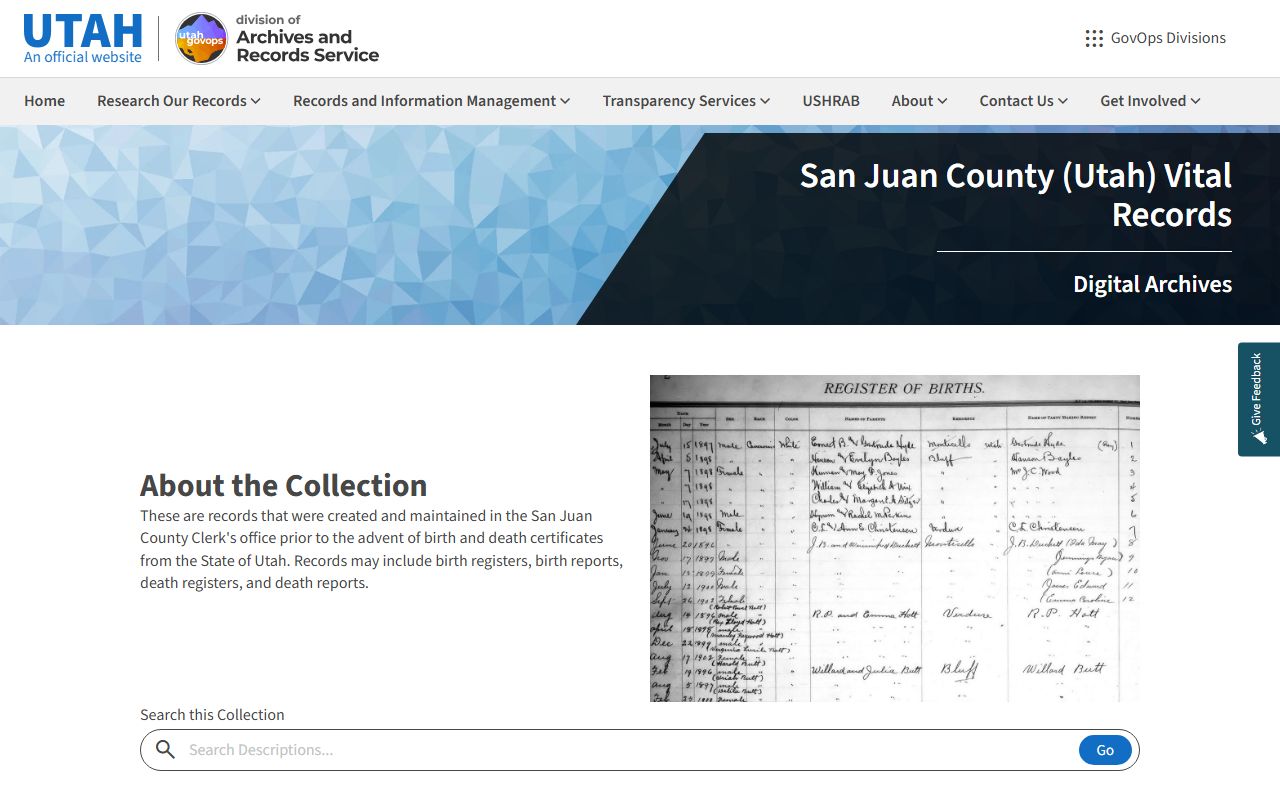
That archives view is useful because it reminds you that older San Juan County records sit inside the state research system, even though the county clerk still owns the live license and the returned copy.
When the record search becomes historical, the easiest route is to start with the county's own license page, then move to the state archives and FamilySearch for indexing help. That order keeps you tied to the official county record first and only then moves you into broader research tools.
Historical San Juan County Records
The Utah State Archives page for San Juan County is the next official source when the marriage is older than the live clerk file. The archives collection page shows that San Juan County clerk-created vital records are preserved in the state system, and the broader Archives site includes marriage research tools, name indexes, and city-and-county record guides. That makes the Archives the right place to check when the county file is old enough that you need a historical trail rather than a live office visit.
For an older San Juan County Marriage License search, FamilySearch can also be useful as an index and clue source. It does not replace the county clerk or the Archives, but it can help you confirm a surname, a date range, or a family relationship before you ask for a county copy. That is especially valuable in a county where travel distance can make it harder to do repeated office visits.
The best way to think about historical San Juan records is to treat the clerk office as the record origin, the Archives as the preservation layer, and FamilySearch as an indexing aid. Those three sources do different jobs, and the search goes faster when you do not expect one of them to do all three.
If you are trying to decide whether a record is likely to be in the county office or the Archives, the age of the marriage is the key. Recent files belong with the clerk. Older files may be easier to trace through the state archives. The county's 1888-to-present span gives you a starting line, and the historical tools help fill in the rest.
More San Juan County Marriage License Help
If you need one more official starting point, the San Juan County Clerk page at sanjuancounty.org/clerk is the page to keep bookmarked. It gives you the office name, the county seat context, and the official county path for the record. That is enough to handle most live Marriage License questions without relying on a third-party summary.
When the search expands beyond a license, the county homepage at sanjuancounty.org is the best place to regroup, and the archives page at archives.utah.gov/research/county-records/sanjuan is the right historical companion. FamilySearch can help with name tracing, but the county clerk remains the office that actually holds the legal county file. That separation is the most important thing to remember if you are trying to match a ceremony date to a record copy.
For most San Juan County searches, the clean workflow is simple. Start with the clerk page, verify the application details, use the statewide 32-day window, and then move to the archives or FamilySearch only if the marriage is old enough that the county copy is no longer the whole story.